

A Fractional CTO is a senior technology leader who provides strategic direction on a part-time, contract, or interim basis.
Companies that are growing quickly or facing complex decisions often need high-level guidance but cannot justify a full-time executive role.
Such an arrangement delivers seasoned leadership without long-term obligations, making it ideal for organizations entering new phases of scale or modernization.
A fractional leader also bridges the space between a company’s vision and its technical execution, ensuring decisions fit long-term plans instead of short-term fixes.
What a Fractional CTO Does
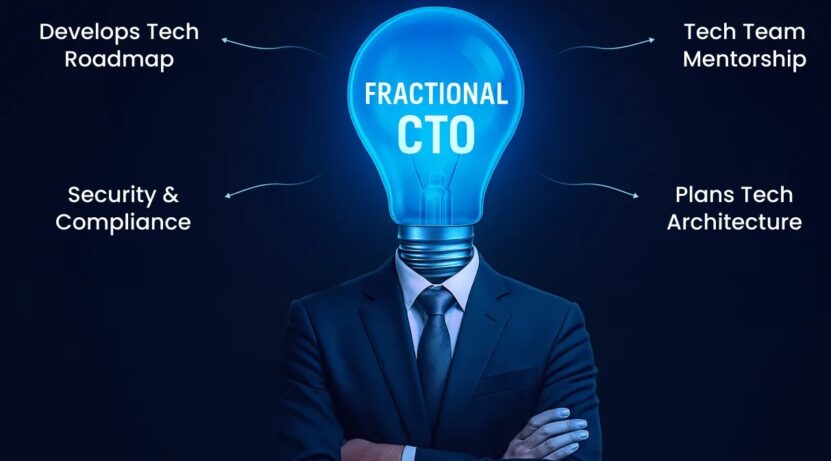
A Fractional CTO carries responsibilities that go far beyond tactical engineering support.
Duties span strategy, execution, team development, security, and financial stewardship.
Strategic Technology Leadership
Strong strategy anchors every successful technical operation.
A Fractional CTO shapes that direction by aligning technology decisions with long-term business objectives.
Insight extends past routine planning and into forecasting, readiness, and structured growth.
Guidance centers on core actions that require careful organization:
- Creating a technical roadmap that supports product and revenue goals
- Conducting assessments of systems to uncover weaknesses or inefficiencies
- Designing architectures capable of expanding as user demand increases
Cloud adoption, data strategy, and AI implementation each gain sharper purpose when tied to business needs instead of isolated technical enthusiasm.
Strategic leadership also includes projections on future requirements so companies maintain progress even during uncertain periods.
Technical Execution and Oversight

Execution forms the operational backbone of a tech organization.
A Fractional CTO ensures that engineering efforts move in a synchronized and predictable way.
Architectural choices, infrastructure planning, and long-term maintainability fall under structured review.
Delivery performance improves when oversight includes the following considerations:
- Introducing or refining Agile practices to ensure consistent output
- Evaluating vendor tools and development platforms for reliability and cost efficiency
- Directing infrastructure design so it can support rising traffic and expanding product features
Timelines, budgets, and quality expectations gain stronger enforcement, reducing friction between engineering, product, and executive teams.
Team Building and Mentoring
Strong technology teams require more than technical ability.
Culture, communication, and internal development define how effectively work moves across the organization. A Fractional CTO helps shape that environment.
Mentorship, recruiting support, and performance guidance reach across teams in ways that benefit both senior and junior contributors.
Responsibilities often include structured development efforts such as:
- Establishing clear roles and expectations for technical contributors
- Coaching individuals on decision-making, architectural thinking, and communication
- Encouraging collaboration that reduces friction between engineering and non-technical stakeholders
An organization gains resilience when team members operate with confidence and shared purpose.
Risk and Security Management

Security risks rise quickly as companies grow, adopt new tools, or expand into new markets.
A Fractional CTO places consistent focus on reducing exposure and building protections that safeguard customer data and business operations.
Structured reviews help identify areas needing immediate attention:
- Evaluation of current security posture and identification of vulnerabilities
- Assessment of compliance needs tied to industry or regulatory requirements
- Development of mitigation plans that include monitoring, response procedures, and preventative controls
Security becomes part of ongoing planning rather than a last-minute reaction, reducing disruptions and long-term liabilities.
Vendor and Budget Management
Financial oversight ensures technical priorities remain grounded in real-world constraints.
A Fractional CTO manages budgets, negotiates with vendors, and ensures money flows toward solutions that deliver measurable outcomes.
Organizations gain clarity and predictability once spending is guided by experienced oversight.
Benefits of Hiring a Fractional CTO

Value gained from a Fractional CTO extends across cost, flexibility, decision-making, and innovation. Each benefit supports companies at varying stages of growth.
Cost-Effective Leadership
High-level expertise often feels out of reach for early-stage companies.
Startups and small organizations gain access to experience that would otherwise stretch budgets beyond feasibility, as illustrated by Exec Capital Fractional CTO, a provider that outlines key advantages such as cost efficiency, scalability, and quick impact.
Flexibility and Scalability
Growing businesses rarely need the same level of executive involvement during all phases of development.
A Fractional CTO adapts to those shifts, increasing or reducing support based on current demands.
Such adaptability proves valuable during product expansions, operational pivots, or transitional situations such as mergers or acquisitions.
Practical advantages appear during times such as:
- Sudden traffic growth
- Shifts in product direction
- Rapid expansion of engineering teams
Companies gain exactly the level of leadership needed for the moment.
Objective, External Perspective
Internal teams often struggle to see systemic issues because of familiarity or organizational pressure.
An outside expert offers neutral evaluation and highlights risks, inefficiencies, or misaligned priorities.
Focus improves once distractions and misplaced urgency lose influence.
Accelerated Innovation
Technology shifts quickly, and organizations often fall behind without guidance.
A Fractional CTO helps identify which new technologies matter, how they fit into existing systems, and what timeline produces the safest and fastest adoption.
Innovation becomes purposeful instead of experimental guesswork.
Network Access
Connections in the technology sector can open paths to specialized talent, strategic partnerships, and collaboration opportunities.
A Fractional CTO often brings an extensive network that supports hiring, vendor selection, and long-term growth strategies.
When to Hire a Fractional CTO

Companies often recognize turning points where experienced leadership becomes essential. Such moments introduce complexity that requires strategic and operational clarity.
Scaling Quickly
Growth places strain on systems that were never designed for increasing volume.
A Fractional CTO helps structure architecture, processes, and engineering discipline so rising demand does not cause outages or slowdowns.
Lack of Senior Tech Leadership
Teams without guidance often fall into reactive behavior, unclear prioritization, or inconsistent delivery.
A Fractional CTO introduces structure and gives teams direction that enhances output and long-term planning.
Too Many Technology Choices
Early-stage companies face an endless stream of ideas, requests, and tools. Such overload creates confusion and misaligned priorities.
Useful evaluation criteria include:
- Expected impact on revenue
- Level of engineering effort required
- Long-term maintainability of the proposed solution
- Decision-making becomes clearer and more disciplined.
Preparing for Investment or M&A
Investors and acquirers expect documented systems, stable infrastructure, and well-defined roadmaps.
It prepares these materials and improves technical credibility during evaluations.
Real-World Case Studies
Case studies highlight how experienced leaders have influenced growth at major companies.
Uber – Thuan Pham
Rising demand pushed Uber toward infrastructure challenges that threatened reliability. Thuan Pham helped design and scale backend systems to support global operations under constant load.
Dropbox – Ruchi Sanghvi
User expansion required Dropbox to strengthen its core infrastructure. Ruchi Sanghvi introduced engineering discipline and performance improvements that supported wide-scale adoption.
Stripe – Greg Brockman
Payment reliability is crucial for Stripe’s success.
Greg Brockman guided the creation of systems designed for global scale and consistent uptime, helping Stripe grow into a trusted financial platform.
How to Hire a Fractional CTO

Hiring a Fractional CTO involves preparation, structured evaluation, and clear communication. Each step ensures the partnership delivers measurable impact.
Assess Your Needs
Organizations gain better outcomes once they identify the challenges requiring executive-level guidance.
Challenges may include scalability constraints, product delays, unclear strategy, or lack of senior engineering leadership.
Engage Through a Network or Firm
Professional networks and specialized firms help match companies with vetted leaders who have relevant experience. Such support reduces risk and accelerates the selection process.
Define Scope and Success Metrics
Clear expectations help both sides stay aligned. KPIs, timelines, responsibilities, and limits on involvement should be outlined before engagement begins.
Onboard and Integrate
Integration with product, engineering, and executive teams requires rapid learning and structured communication.
Meaningful integration steps often include:
- Reviewing current processes and engineering velocity
- Establishing communication routines with leadership and team members
- Identifying immediate risks needing short-term action
- Organizations function smoothly once alignment is achieved.
Monitor and Adjust
Ongoing evaluation supports progress. Feedback cycles keep priorities aligned, and adjustments reflect new challenges or opportunities.
Transition to Independence
A successful engagement closes with a team capable of moving forward without external support. Processes mature, engineering leadership strengthens, and long-term strategies remain clear and actionable.
Final Thoughts
A Fractional CTO operates as a strategic partner who helps businesses avoid technical debt, reduce risk, and accelerate innovation without incurring the cost of a full-time executive.
Companies facing rapid scaling, upcoming fundraising, product pivots, or a lack of strong technical direction gain significant advantages by engaging an experienced leader capable of guiding long-term success.